Cookie Policy: This site uses cookies to improve your experience. You can find out more about our use of cookies in our Privacy Policy. By continuing to browse this site you agree to our use of cookies.

AdipoGen Life Sciences
Midkine (mouse) (monomer):Fc (silent) InVivoKine™
CHF 0.00
Out of stock
NEW


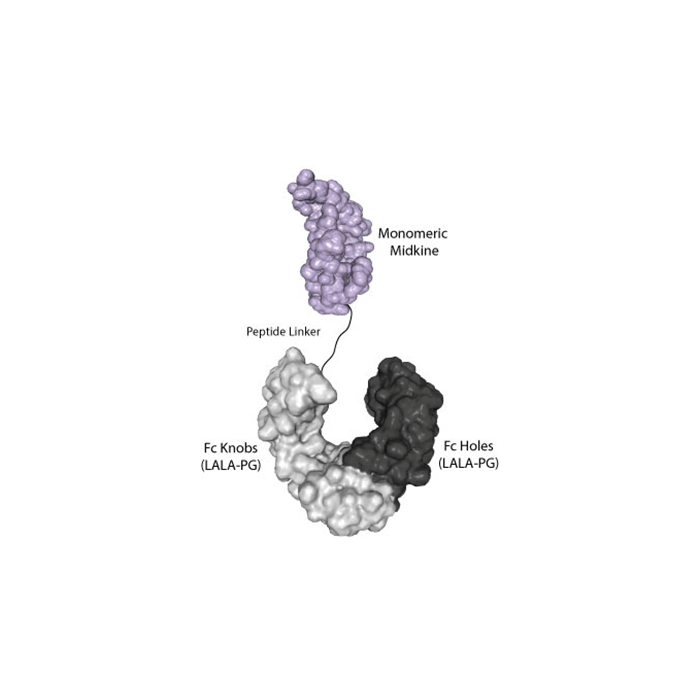
Figure 1: Protein structure of Midkine (mouse) (monomer):Fc (silent) InVivoKine™ (Prod. No. AG-40B-0282).
| Product Details | |
|---|---|
| Synonyms | Midkine (mouse) (monomeric):Fc (LALA-PG) KIH (human) (rec.); MDK; Retanoic Acid-responsive Protein 2; Retinoic Acid-induced Differentiation Factor |
| Product Type | Protein |
| Properties | |
| Source/Host | HEK 293 cells. Produced using animal component-free medium. |
| Sequence |
Extracellular domain of mouse Midkine (aa 23-140) is fused at the C-terminus to the Fc portion of human IgG1 (LALA-PG) (Knobs-into-Holes technology) (see reference: J.B. Ridgway, et al.; Protein Eng. 9, 617 (1996)). |
| Crossreactivity | Mouse |
| Specificity |
The Fc contains the mutations LALA-PG that abolish the interaction between the Fc and FcγRs and therefore Fc undesirable effects. The Fc (LALA-PG) is named Fc (Silent). |
| MW | ~60kDa and 28kDa (SDS-PAGE) |
| Purity | ≥95% (SDS-PAGE) |
| Endotoxin Content | <0.01 EU/μg protein (LAL test). |
| Concentration | After reconstitution: 1mg/ml |
| Reconstitution | Reconstitute with 50μl endotoxin-free water. |
| Accession Number | P12025 |
| Formulation | Lyophilized. Contains PBS. |
| Protein Negative Control |
Fc (silent) InVivoKine™ (human) IgG1 Control (Prod. No. AG-35B-0018) |
| Other Product Data |
Uniprot link P12025: Midkine (mouse) |
| Shipping and Handling | |
| Shipping | BLUE ICE |
| Short Term Storage | +4°C |
| Long Term Storage | -20°C |
| Handling Advice |
After reconstitution, prepare aliquots and store at -20°C. Avoid freeze/thaw cycles. Centrifuge lyophilized vial before opening and reconstitution. PBS containing at least 0.1% BSA should be used for further dilutions. |
| Use/Stability |
Stable for at least 6 months after receipt when stored at -20°C. Working aliquots are stable for up to 3 months when stored at -20°C. |
| Documents | |
| Product Specification Sheet | |
| Datasheet |
 Download PDF Download PDF |
Description
Midkine (MSK) is a multifunctional growth factor protein that plays a significant role in various biological processes, including development, inflammation and cancer. MDK is expressed in a small number of embryonic tissues, including the CNS. MDK is highly upregulated in response to various pathological conditions, both in the CNS and the periphery. Monocytes, macrophages and monocyte-derived dendritic cells (mDCs), as well as non-hematopoietic cell types such as endothelial cells, are capable of producing MDK . MDK is also expressed by oligodendrocyteprecursor cells (OPCs), followed by fetal astrocytes, neurons, and newly formed oligodendrocytes. Several plasma membrane receptors function as MDK receptors, including integrins, proteoglycans, neurogenic locus notch homolog protein 2 (Notch2), ALK, low-density lipoprotein receptor-related protein (LRP) and protein tyrosine phosphatase z (PTPz).
Midkine is abnormally expressed at high levels in various human malignancies, including carcinomas of the esophagus, stomach, colon, pancreas, thyroid, lung, breast, urinary bladder, uterus, ovary, prostate, and hepatocellular carcinoma, as well as osteosarcoma, neuroblastoma, and glioblastoma. MDK attenuates Aβ assembly and influences amyloid formation. Knockout of the Mdk gene, which codes for midkine, increases amyloid formation and microglial activation in the brain. In addition to midkine’s role in inhibiting amyloid beta assembly, the protein also functions as a growth factor that promotes neurite outgrowth and cell survival.
The Midkine (mouse):Fc (silent) InVivoKine™ is produced by using two different vectors, one encoding for the Midkine (mouse):Fc (LALA-PG) Knobs sequence (synthesizing a protein of 60kDa) and one encoding for the Fc (LALA-PG) Holes sequence (synthesizing a protein of 28kDa). Both vectors transfected into HEK293 cells produce both Fc molecules (Knobs-into-Holes technology; J.B. Ridgway, et al.; Protein Eng. 9, 617 (1996)) required for dimerization of the Fc moieties and for secretion of the final protein Midkine (mouse) :Fc (silent) InVivoKine™. The LALA-PG mutations inhibit binding to FcγRs and C1q while FcRn binding and Fc stability remain unaffected.
InVivoKines™ are a new generation of recombinant fusion proteins for immunotherapeutic, preclinical and translational in vivo research, developed and manufactured by AdipoGen Life Sciences.
Related Products