Cookie Policy: This site uses cookies to improve your experience. You can find out more about our use of cookies in our Privacy Policy. By continuing to browse this site you agree to our use of cookies.

BellBrook
APE2 (human) (rec.) (His) (active) (250µg)
As low as
2248
CHF
CHF 2’248.00
In stock
Only %1 left
BBL-2382-C250250 µgCHF 2’248.00



Specifications / Handling
| Product Details | |
|---|---|
| Synonyms | DNA-(apurinic or apyrimidinic site) Endonuclease 2; AP Endonuclease XTH2; APEX2 |
| Product Type | Protein |
| Properties | |
| Source/Host | Insect cells |
| Sequence |
Full-length human APE2 enzyme (aa1-518) with an N-terminal 6xHis tag. |
| Crossreactivity | Human |
| Application |
Drug Discovery |
| Biological Activity |
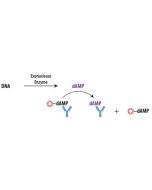
The enzyme has been thoroughly validated with the Transcreener dAMP FP Assay Kit. |
| MW | 58.2kDa |
| Purity | ≥70% (SDS-PAGE) |
| Concentration | Lot dependent. |
| Accession Number | Q9UBZ4 |
| Formulation | Liquid in 10mM Tris-HCl, 100mM NaCl, 1mM DTT, 20% Glycerol (pH 7.5). |
| Other Product Data |
Click here for Complete Information from the Original Manufacturer |
| Shipping and Handling | |
| Shipping | DRY ICE |
| Short Term Storage | -20°C |
| Long Term Storage | -80°C |
| Handling Advice | Avoid freeze/thaw cycles. |
| Use/Stability | Stable for at least 6 months after receipt when stored at -80°C. |
| Documents | |
| Product Specification Sheet | |
| Datasheet |
 Download PDF Download PDF |
Scientific Background Information
Product Description
APE2 (Apurinic/Apyrimidinic Endodeoxyribonuclease 2) is a DNA repair enzyme involved in maintaining genome integrity through the base excision repair (BER) pathway and the cellular response to DNA damage. APE2 possesses 3′-5′ exonuclease and 3′-phosphodiesterase activities, enabling it to process damaged DNA termini and facilitate downstream repair events. Unlike the closely related APE1, APE2 plays a prominent role in replication stress responses and DNA damage signaling, particularly in proliferating cells. It interacts with key repair and checkpoint proteins, including PCNA and ATR pathway components, linking DNA end processing to cell cycle control and checkpoint activation. APE2 is essential for efficient repair of oxidative DNA lesions and stalled replication forks, and its activity contributes to genome stability, immune system development, and cell survival under genotoxic stress. Dysregulation of APE2 has been associated with cancer progression and altered responses to DNA-damaging therapies, making it a relevant target for studies of DNA repair mechanisms and therapeutic sensitization. This APE2 product is suitable for use in biochemical assays, DNA repair studies, and investigations of replication stress and genome maintenance pathways.
Related Products