Cookie Policy: This site uses cookies to improve your experience. You can find out more about our use of cookies in our Privacy Policy. By continuing to browse this site you agree to our use of cookies.

Satiety - Targeting Food Intake Regulation Pathways
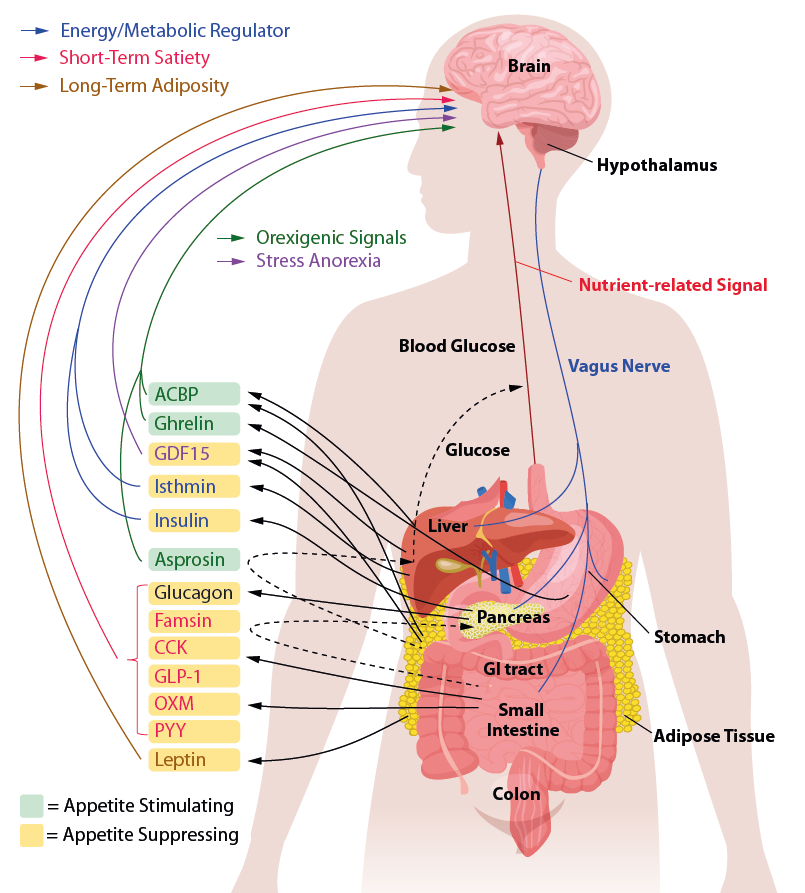
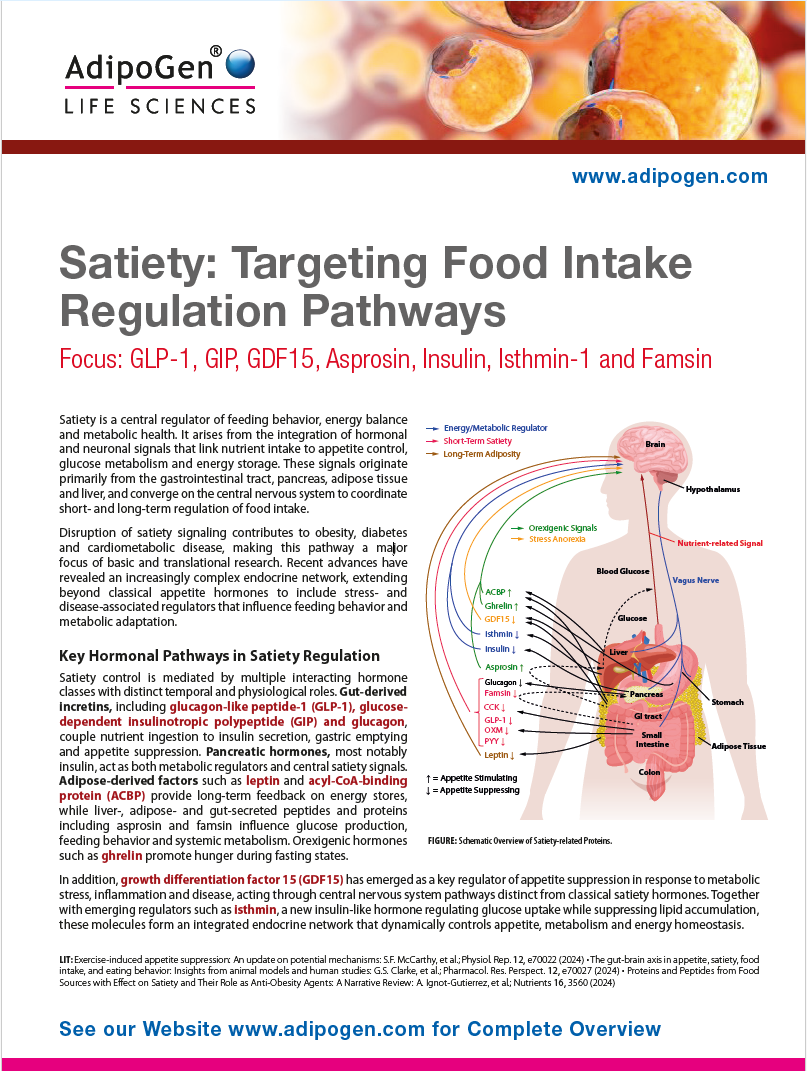
Satiety is a central regulator of feeding behavior, energy balance and metabolic health. It arises from the integration of hormonal and neuronal signals that link nutrient intake to appetite control, glucose metabolism and energy storage. These signals originate primarily from the gastrointestinal tract, pancreas, adipose tissue and liver, and converge on the central nervous system to coordinate short- and long-term regulation of food intake.
Disruption of satiety signaling contributes to obesity, diabetes and cardiometabolic disease, making this pathway a major focus of basic and translational research. Recent advances have revealed an increasingly complex endocrine network, extending beyond classical appetite hormones to include stress- and disease-associated regulators that influence feeding behavior and metabolic adaptation.
Key Hormonal Pathways in Satiety Regulation
Satiety control is mediated by multiple interacting hormone classes with distinct temporal and physiological roles. Gut-derived incretins, including glucagon-like peptide-1 (GLP-1), glucose-dependent insulinotropic polypeptide (GIP) and glucagon, couple nutrient ingestion to insulin secretion, gastric emptying and appetite suppression. Other gut-hormones, such as oxyntomodulin (OXM), cholecystokinin (CCK) and peptide YY are also important anorexigenic hormones secreted upon food intake. Pancreatic hormones, most notably insulin, act as both metabolic regulators and central satiety signals. Adipose-derived factors such as Leptin and acyl-CoA-binding protein (ACBP) provide long-term feedback on energy stores, while liver-, adipose- and gut-secreted peptides and proteins including asprosin and famsin influence glucose production, feeding behavior and systemic metabolism. Orexigenic hormones such as ghrelin promote hunger during fasting states.
In addition, growth differentiation factor 15 (GDF15) has emerged as a key regulator of appetite suppression in response to metabolic stress, inflammation and disease, acting through central nervous system pathways distinct from classical satiety hormones. Together with emerging regulators such as isthmin, a new insulin-like hormone regulating glucose uptake while suppressing lipid accumulation, these molecules form an integrated endocrine network that dynamically controls appetite, metabolism and energy homeostasis.
LIT: Exercise-induced appetite suppression: An update on potential mechanisms: S.F. McCarthy, et al.; Physiol. Rep. 12, e70022 (2024) • The gut-brain axis in appetite, satiety, food intake, and eating behavior: Insights from animal models and human studies: G.S. Clarke, et al.; Pharmacol. Res. Perspect. 12, e70027 (2024) • Proteins and Peptides from Food Sources with Effect on Satiety and Their Role as Anti-Obesity Agents: A Narrative Review: A. Ignot-Gutierrez, et al.; Nutrients 16, 3560 (2024)
Incretins and Satiety: Hormonal Signals That Shape Appetite
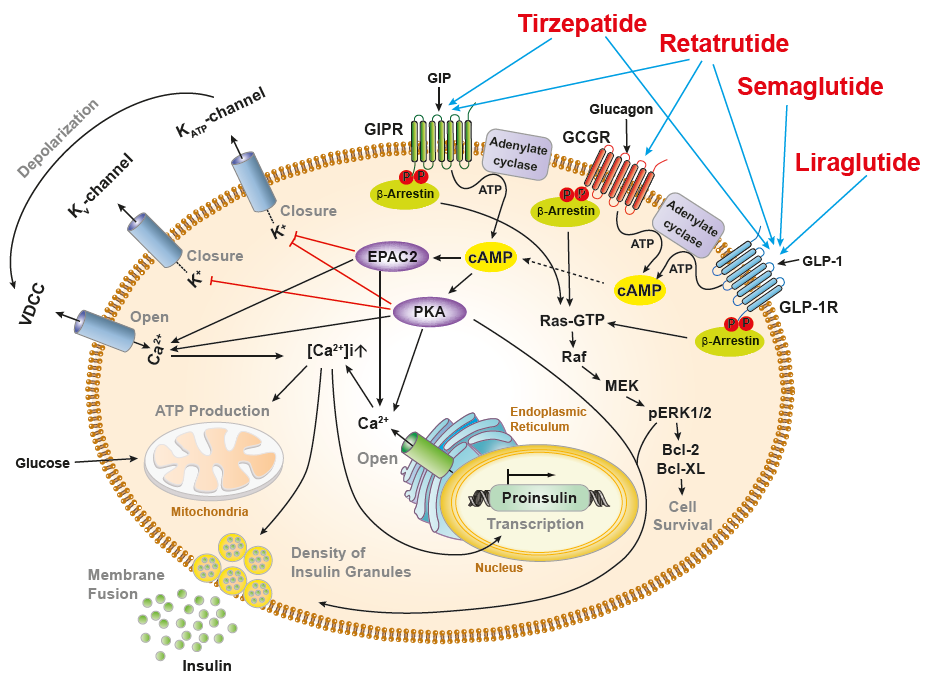 Incretins (gastric inhibitory polypeptide (GIP), glucagon-like peptide-1 (GLP-1), and glucagon) are gut-derived hormones released after food intake that play a central role in regulating blood glucose and appetite. GIP and GLP-1 are the two primary incretins secreted from the intestine on ingestion of nutrients or glucose to stimulate insulin secretion from pancreatic β-cells. GIP enhances and GLP-1 inhibits postprandial glucagon response. In adipose tissues, only GIP, not GLP-1 facilitates fat deposition. In bone, GIP promotes bone formation while GLP-1 inhibits bone absorption. In the brain, both GIP and GLP-1 are thought to be involved in memory formation and in control of appetite. Glucagon is secreted from pancreatic α-cells and acts in opposition to insulin by promoting gluconeogenesis and glycogenolysis and plays an essential role as regulator of glucose and lipid metabolism. Recently, synthetic long-acting GLP-1 and/or GIP analogs have been shown to improve insulin sensitivity, insulin secretory response and to reduce appetite.
LIT: Exercise-induced appetite suppression: An update on potential mechanisms: S.F. McCarthy, et al.; Physiol. Rep. 12, e70022 (2024) • The gut-brain axis in appetite, satiety, food intake, and eating behavior: Insights from animal models and human studies: G.S. Clarke, et al.; Pharmacol. Res. Perspect. 12, e70027 (2024) • Proteins and Peptides from Food Sources with Effect on Satiety and Their Role as Anti-Obesity Agents: A Narrative Review: A. Ignot-Gutierrez, et al.; Nutrients 16, 3560 (2024)
GLP-1 Receptor Agonists
| Product Name | PID | Product Description |
| Liraglutide | AG-CP3-0034 | Liraglutide is a long-acting acylated glucagon-like peptide-1 (GLP-1) receptor agonist. |
| Retatrutide . sodium salt | AG-CP3-0044 | Retatrutide is a novel triple agonist peptide of the glucagon receptor (GCGR), glucose-dependent insulinotropic polypeptide receptor (GIPR) and glucagon-like peptide-1 receptor (GLP-1R). |
| Semaglutide | AG-CP3-0040 | Semaglutide is a longer-acting alternative glucagon-like peptide-1 (GLP-1) receptor agonist to Liraglutide. |
| Semaglutide . acetate | AG-CP3-0032 | Semaglutide is a longer-acting alternative glucagon-like peptide-1 (GLP-1) receptor agonist to Liraglutide. Salt form. |
| Tirzepatide | AG-CP3-0043 | Tirzepatide is a novel dual glucose-dependent insulinotropic polypeptide (GIP) and glucagon-like peptide-1 (GLP-1) receptor agonist. |
| Cagrilintide . acetate NEW | AG-CP3-0047 | Cagrilintide is a novel long-acting nonselective amylin receptors (AMYR) and calcitonin G protein-coupled receptor (CTR) agonist. |
| Mazdutide NEW | AG-CP3-0045 | Mazdutide is a novel long-acting dual glucagon-like peptide-1 (GLP-1) receptor and glucagon receptor (GCGR) agonist. |
| Survodutide NEW | AG-CP3-0046 | Survodutide is a novel long-acting dual glucagon-like peptide-1 (GLP-1) receptor and glucagon receptor (GCGR) agonist. |
| DMB [GLP-1R Agonist] | AG-CR1-3759 | DMB is a small molecule GLP-1 receptor agonist that exerts its activating effect by forming hydrogen bonds with the Tyr42, Cys71 and Ser84 residues of GLP-1R. |
NEW GLP-1 Receptor Protein for Screening of GLP-1R Modulators
| Product Name | PID | Product Description |
| GLP-1R (human) (rec.) (His) | AG-40B-0279 |
This protein binds to GLP-1, Semaglutide and Tirzepatide. It is of potential use for screening of new GLP-1R agonists. |
| GLP-1R (human) (rec.) (His) (Biotin) | AG-40B-0279B |
This protein can be used to block GLP-1 in vitro or for high-throughput screening (HTS) assays (binding of GLP-1 analogs). Potential use for screening of new GLP-1R agonists. |
| GLP-1R (human) (monomer):Fc (silent) InVivoKine™ | AG-40B-0272 |
This protein binds to GLP-1, Semaglutide and Tirzepatide. It is of potential use for screening of new GLP-1R agonists. Can be used to block GLP-1 in vivo. |
GDF15 – Exercise-induced Factor Regulating Appetite
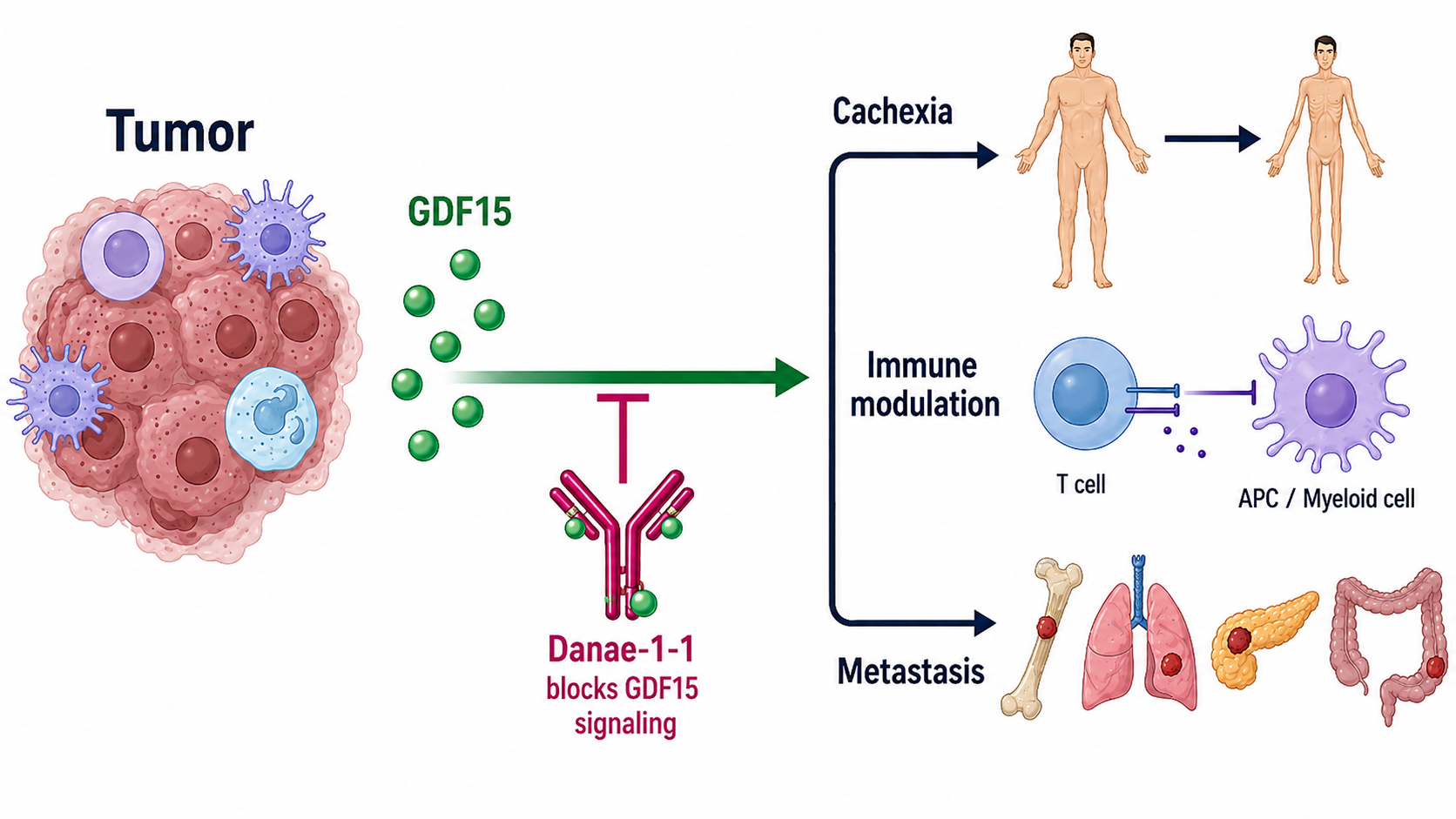
Growth and differentiation factor 15 (GDF15; Macrophage Inhibitory Cytokine 1; MIC-1) is a member of transforming growth factor-β (TGF-β) superfamily. GDF15 is a cytokine, secreted from cells undergoing mechanical or chemical stress and it increases during exercice. GDF15 acts through a recently identified receptor expressed in the brain called glial-derived neurotrophic factor (GDNF) receptor α-like (GFRAL) which signals through the "Rearranged during Transfection" (RET) tyrosine kinase receptor. Functions of GDF15 are pleiotropic and include appetite regulation/suppression, actions on metabolism, pregnancy, cell survival, aging, immune response and inflammation. Recombinant GDF15 administered to mice drives weight loss. Inhibition of the GDF15-GFRAL axis with a blocking antibody leads to inhibition of cachexia, preventing weight loss and reversing anorectic behavior.
LIT: GDF15 in Appetite and Exercise: Essential Player or Coincidental Bystander? A.B. Klein, et al.; Endocrinol. 163, bqab242 (2022) • GDF15 is still a mystery hormone: C.M. Sigvardsen, et al.; Trends Endocrinol. Metab. 36, 591 (2025)
Unique Mouse GDF15 Recombinant Blocking Antibody
AdipoGen Life Sciences' recombinant monoclonal GDF15 antibody (Clone Danae-1-1) is composed of human variable regions (VH and VL) (λ-chain) of immunoglobulin fused to the mouse lgG2b Fc domain. Inhibits the binding of mouse GDF15 to its receptor GFRAL.
High levels of GDF15 cause anorectic effects and cachexia. Various functions have been reported for GDF15, including inhibition of TNF-α production from lipopolysaccharide-stimulated macrophages and the induction of cartilage formation. GDF15 also promotes neuronal survival. GFRAL and GDF15 signaling are implicated in diet-based obesity and insulin resistance. Recently, GDF15 has also been a key player in human aging. It has been linked to aging-related processes, including cellular senescence and the dysfunction of mitochondria, as well as age-related diseases, such as Alzheimer's disease. Blocking of the GDF15-GFRAL binding has some therapeutic implications.
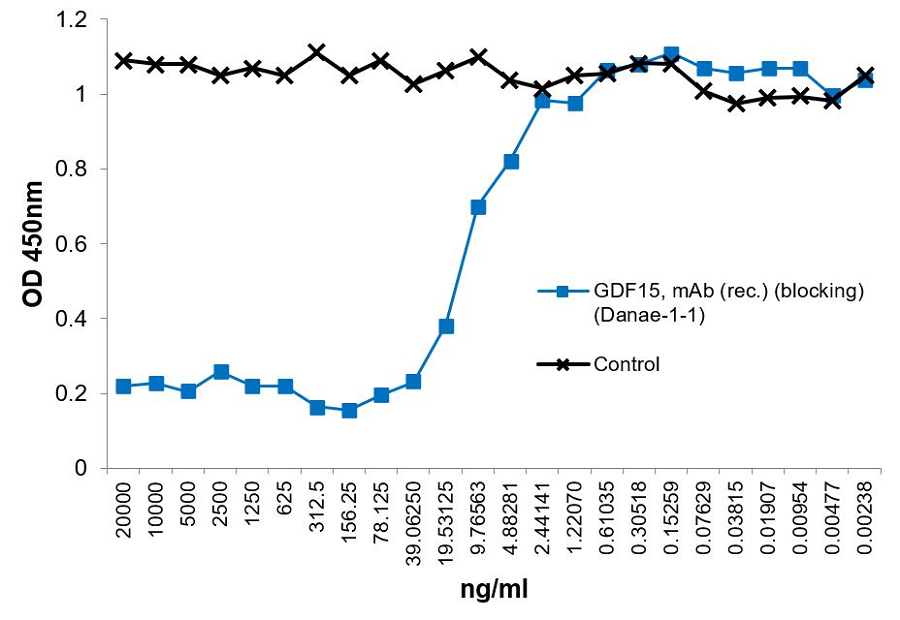
Binding Assay: Binding of GDF15 (mouse) to GFRAL (mouse) is inhibited by GDF15, mAb (rec.) (blocking) (Danae-1-1) (preservative free) (Prod. No. AG-27B-0024).
Method: GFRAL (mouse) is coated on an ELISA plate at 1µg/ml. anti-GDF15, mAb (rec.) (blocking) (Danae-1-1) (Prod. No. AG-27B-0024) or an unrelated mAb (recombinant) (Control) were added (starting at 20µg/ml with a twofold serial dilution) together with 30ng/ml of GDF15 (mouse):Fc (silent) InVivoKine™ (Prod. No. AG-40B-0245). After incubation for 1 h at RT, the binding was detected using an anti-Fc human antibody (HRP).
Biologically Active GDF15 and GFRAL Proteins
| Product Name | PID | Source | Endotoxin | Species |
| AG-40B-0253 | HEK 293 cells | <0.01EU/µg | Human, Mouse | |
|
GDF15 (mouse):Fc (silent) InVivoKine™ |
AG-40B-0245 | HEK 293 cells | <0.01EU/µg | Mouse |
| Fc (silent) InVivoKine™ Human IgG1 Control CONTROL PROTEIN | AG-35B-0018 | HEK 293 cells | <0.01EU/µg | Human, Mouse |
| GFRAL (human):Fc (human) (rec.) | CHI-HF-210GFRAL | HEK 293 cells | <1EU/mg | Human |
| GFRAL (mouse):Fc (mouse) (rec.) | CHI-MF-110GFRAL | HEK 293 cells | <0.06EU/µg | Mouse |
Insulin & Isthmin-1: Linking Metabolic Control to Appetite Regulation
Insulin is a central metabolic hormone that not only regulates glucose homeostasis but also plays a critical role in the control of satiety and energy balance. In response to an elevation in plasma glucose and amino acids (after consumption of a meal), insulin is released from the β-cells in the pancreas. When plasma glucose falls (during fasting or exercise), glucagon is secreted by α-cells, which surround the β-cells in the pancreas. In the brain, insulin modulates key appetite-regulating neuronal circuits. By activating anorexigenic pathways and suppressing orexigenic signals, insulin contributes to reduced food intake and the promotion of satiety following meals. Disruption of central insulin signaling has been linked to Types I/II diabetes, obesity, insulin resistance and impaired appetite control. Isthmin-1 (ISM1) is a liver-derived metabolic regulator that improves glucose uptake and insulin sensitivity in peripheral tissues and supports energy homeostasis indirectly by enhancing metabolic efficiency and promoting a balanced energy state.
LIT: Exercise-induced appetite suppression: An update on potential mechanisms: S.F. McCarthy, et al.; Physiol. Rep. 12, e70022 (2024) • The gut-brain axis in appetite, satiety, food intake, and eating behavior: Insights from animal models and human studies: G.S. Clarke, et al.; Pharmacol. Res. Perspect. 12, e70027 (2024) • Proteins and Peptides from Food Sources with Effect on Satiety and Their Role as Anti-Obesity Agents: A Narrative Review: A. Ignot-Gutierrez, et al.; Nutrients 16, 3560 (2024)
| Product Name | PID | Sensitivity | Range | Sample Type |
| AG-45B-0031 | 10 pg/ml | 7.81 to 500 pg/ml | Plasma, Serum, CCS | |
| AG-45B-0032 | 0.4 ng/ml | 0.625 to 40 ng/ml | Plasma, Serum, CCS | |
| Product Name | PID | Source | Endotoxin | Species |
| AG-40B-0214 | HEK 293 cells | <0.01EU/µg | Human | |
| AG-40B-0215 | HEK 293 cells | <0.01EU/µg | Mouse | |
| Product Name | PID | Isotype | Applications | Species |
| AG-27B-0022 | Mouse IgG2bλ | ELISA, WB | Human, Mouse |
Asprosin
Asprosin is the C-terminal cleavage product of the protein Fibrillin-1. Asprosin is a fasting-induced glucogenic and orexigenic hormone that plays a critical role in the regulation of energy homeostasis. Within the central nervous system, asprosin works by stimulating the orexigenic AgRP+ (Agouti related neuropeptide) neurons via a cAMP-dependent pathway and by inhibiting the anorexigenic POMC+ (proopiomelanocortin) neurons in a GABA- dependent manner, promoting food intake and reducing satiety signals. Elevated circulating asprosin levels have been associated with obesity, insulin resistance and metabolic syndrome, highlighting its relevance
in metabolic disease research.
LIT: Asprosin in health and disease, a new glucose sensor with central and peripheral metabolic effects: M. Farrag, et al.; Front. Endocrinol. 13, 110191 (2023) • Asprosin: its function as a novel endocrine factor in metabolic-related diseases: Y. Zhang, et al.; J. Endocrinol. Invest. 47, 1839 (2024)
| Product Name | PID | Sensitivity | Range | Sample Type |
| AG-45B-0010 | 230 pg/ml | 0.3125 to 20 ng/ml | Plasma, Serum, CCS | |
| AG-46B-0011 | 150 ng/ml | 0.156 to 10 ng/ml | CCS | |
| Product Name | PID | Isotype | Applications | Species |
| anti-Asprosin, mAb (Birdy-1) | AG-20B-0073 | Mouse IgG1 | ELISA, WB | Human, Mouse |
| anti-Asprosin (human), mAb (Birdy-2) | AG-20B-0074 | Mouse IgG2a | ELISA, WB | Human |
| anti-Asprosin, Rabbit Monoclonal (RM463) | REV-31-1355-00 | Rabbit IgG | IHC, WB | Human |
| Product Name | PID | Source | Endotoxin | Species |
| AG-40B-0174 | E. coli | <0.01EU/µg | Human |
Famsin – Linking Metabolic Control to Appetite Regulation
Famsin is an emerging gut-derived hormone that plays an important role in the body’s adaptation to fasting. During periods of food deprivation, circulating famsin levels rise, helping maintain blood glucose by stimulating glucagon release and supporting hepatic glucose production. By acting as part of a gut-pancreas-liver signaling axis, famsin helps to balance energy needs during fasting while interacting with pathways that influence hunger and metabolic regulation.
LIT: Famsin and fasting adaptation: A glucagon connection: S. Li, et al.; Cell Metab. 37, 561 (2025)
| Product Name | PID | Source | Endotoxin | Species |
| AG-40B-0278 | CHO cells | <0.01EU/µg | Mouse |
Feimin – A Feeding-Induced Myokine Linking Muscle to Glucose Homeostasis
Feimin is a recently identified feeding-induced myokine that reveals an additional layer of communication between skeletal muscle and systemic metabolism. Following food intake, circulating Feimin levels increase, with skeletal muscle representing a major source of the secreted protein. Feimin binds to the receptor tyrosine kinase MERTK and activates AKT signaling, thereby promoting glucose uptake in peripheral tissues while suppressing hepatic glucose production. Unlike insulin, Feimin induces a weaker but more sustained activation of AKT, suggesting that it may complement insulin in the fine-tuning of postprandial glucose homeostasis. Experimental studies further demonstrate that Feimin and insulin can act synergistically to improve glucose control.
As a feeding-responsive endocrine signal, Feimin broadens the emerging network of hormones and myokines that coordinate nutrient availability, glucose utilization and energy homeostasis following food intake. Its discovery highlights the increasingly important role of skeletal muscle as an endocrine organ and establishes the Feimin-MERTK axis as an exciting new research pathway in metabolism, obesity and diabetes.
LIT: A feeding-induced myokine modulates glucose homeostasis: X. Shi, et al.; Nat. Metab. 7, 68 (2025)
| Product Name | PID | Source | Endotoxin | Species |
| AG-40B-0296 | E. coli | <0.01EU/µg | Human |
|
More Information |
|
Downloadable Flyer |
|
Satiety: Targeting Food Intake Regulation Pathways 2026 Product Flyer Released - March 2026 |
 Download |