Cookie Policy: This site uses cookies to improve your experience. You can find out more about our use of cookies in our Privacy Policy. By continuing to browse this site you agree to our use of cookies.

Bertin Bioreagent
Myelotracker Cy3 Conjugation Kit
As low as
898
CHF
CHF 898.00
In stock
Only %1 left
BRT-D20888-C01010 µgCHF 898.00


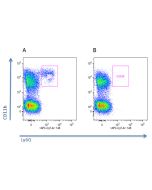
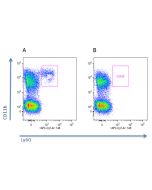
Figure 1: Neutrophil Labelling with Myelotracker
Specifications / Handling
| Product Details | |
|---|---|
| Synonyms | RI-MUB40 peptide; MUB40; MUB40-Cy3; Neutrophil Tracker Kit; Neutrophil Labeling Kit; Fluorescent Neutrophil Staining Kit; Neutrophil Cytometry Probe; Neutrophil Microscopy Reagent |
| Product Type | Kit |
| Properties | |
| Application Set | Other |
| Specificity |
Lactoferrin. Specificity through lactoferrin targeting ensures selective detection of neutrophils. It can be used for Microscopy, Flow cytometry, and animal model infection. |
| Crossreactivity |
All Guinea pig Human Mouse Rabbit |
| Detection Type | Fluorescent |
| Kit Contains |
1 vial Myelotracker-Cy3 1 vial Reconstitution Buffer Note: Reconstitute the content of the vial Myelotracker-Cy3 in 1 mL of the provided buffer. |
| Other Product Data |
Click here for Original Manufacturer Product Datasheet Our product description may differ slightly from the original manufacturer's product datasheet. |
| Declaration | Manufactured by Bertin Bioreagent |
| Shipping and Handling | |
| Shipping | BLUE ICE |
| Long Term Storage | -20°C |
| Handling Advice | Protect from light. |
| Use/Stability | Stable for at least 1 year after receipt when stored at -20°C. |
| Documents | |
| Safety Data Sheet |
 Download PDF Download PDF |
| Product Specification Sheet | |
| Datasheet |
Download PDF |
Scientific Background Information
Product Description
Myelotracker® has been developed to help research teams track neutrophils with precision and simplicity. By targeting lactoferrin, a major protein stored in neutrophils, the kit ensures accurate detection while preserving the cells’ natural functions. Available in two versions (Cy3 and Cy5), Myelotracker® is fully compatible with widely used laboratory techniques such as fluorescence microscopy and flow cytometry. It can be applied to human samples as well as animal models (mouse, rabbit, guinea pig), offering flexibility for a broad range of biomedical studies. In addition to neutrophils, Myelotracker® has also demonstrated its ability to label other white blood cells such as basophils and eosinophils, providing a broader perspective on immune mechanisms involved in inflammation and allergies.
How to use: To label blood-isolated neutrophils with Myelotracker, first isolate and resuspend the cells. For fixed-cell labeling, fix and permeabilize neutrophils to reveal intracellular lactoferrin-rich granules; for live-cell assays, stimulate neutrophils to induce degranulation and extracellular lactoferrin release. Incubate cells with Myelotracker-Cy3 or -Cy5, then wash gently to remove unbound probe. Fixed samples can be mounted for fluorescence microscopy or prepared for flow cytometry, while live samples should be analyzed immediately. This protocol enables visualization of either intracellular granules or extracellular lactoferrin. In fixed tissue samples, Myelotracker penetrates after fixation and permeabilization to label intracellular lactoferrin, allowing precise visualization of neutrophil distribution within the tissue architecture.
Excitation Laser wavelength: 554nm. Emission wavelength: 566nm.
Advantages:
- Specificity through lactoferrin targeting ensures selective detection of neutrophils.
- Validated across species, proven performance in human, mouse, rabbit, and guinea pigs.
- Non-activating labeling does not trigger neutrophil activation, preserving physiological states.
- Dual detection capability labels intracellular granules (in fixed cells or tissues) and extracellular lactoferrin released during activation.
Product-specific References
- MUB40 Binds to Lactoferrin and Stands as a Specific Neutrophil Marker: M.C. Anderson, et al.; Cell Chem. Biol. 25, 483 (2018)
- The MUB40 Peptide for Use in Detecting Neutrophil-Mediated Inflammation Events: M.C. Anderson, et al.; J. Vis. Exp. 143 (2019)
- Shigella-mediated oxygen depletion is essential for intestinal mucosa colonization: J.-Y. Tinevez, et al.; Nat. Microbiol. 4, 2001 (2019)
- APRIL-producing eosinophils are involved in gastric MALT lymphomagenesis induced by Helicobacter sp infection: A. Blosse, et al.; Sci. Rep. 10, 14858 (2020)
- Neutrophils degranulate GAG-containing proteoglycofili, which block Shigella growth and degrade virulence factors: A.C. Andre, et al.; bioRxiv (Epub ahead) (2022)
- Ascorbate deficiency increases progression of shigellosis in guinea pigs and mice infection models: J. Skerniskyte, et al.; Gut Microb. 15, 2271597 (2023)
Related Products
-
 Myelotracker Cy5 Conjugation Kit BRT-D20889