Cookie Policy: This site uses cookies to improve your experience. You can find out more about our use of cookies in our Privacy Policy. By continuing to browse this site you agree to our use of cookies.

AdipoGen Life Sciences
Tubulin Post-translational Modification (PTM) Antibodies Starter Set
As low as
880
CHF
CHF 880.00
In stock
Only %1 left
AG-44B-0014-KI011 SetCHF 880.00
NEW



Specifications / Handling
| Product Details | |
|---|---|
| Synonyms | Tubulin PTM Antibodies Starter Set |
| Product Type | Set |
| Properties | |
| Application Set | Western Blot |
| Specificity |
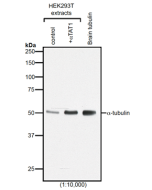
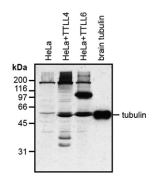
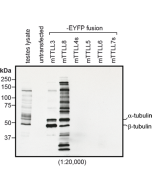
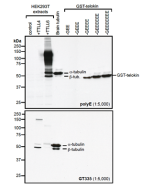
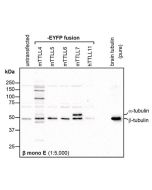
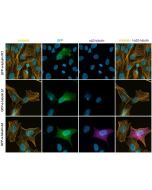
Each antibody in the Tubulin Post-translational Modification (PTM) Antibodies Starter Set has been thoroughly validated and detects endogenous levels of its target modification. • anti-Polyglutamylation Modification, mAb (GT335) (#AG-20B-0020), a mouse IgG1κ monoclonal antibody, detects the posttranslational modification (poly)glutamylation on proteins. Reacts with polyglutamylated α- and β-Tubulin. • anti-α-Tubulin (acetylated), mAb (TEU318) (#AG-20B-0068), a mouse IgG1 monoclonal antibody, specifically detects α-Tubulin acetylated at lysine 40 (K40). • anti-Polyglutamate chain (polyE), pAb (IN105) (#AG-25B-0030), a rabbit polyclonal antibody, recognizes C-terminally located linear α-linked glutamate chains containing 4 or more glutamate residues. It is particularly useful for detecting long polyglutamate chains. • anti-Tubulin (glycylated), pAb (Gly-pep1) (#AG-25B-0034), a rabbit polyclonal antibody, detects mono- or bi-glycylated Tubulins. • anti-β-Tubulin (β-monoE), pAb (IN115) (#AG-25B-0039), a rabbit polyclonal antibody, preferentially recognizes monoglutamylated β-Tubulin. Recognition requires the GE(*-E)F sequence motif, which is present in several β-Tubulin isotypes and enables selective detection of β-Tubulin monoglutamylation. • anti-Delta2-Tubulin, pAb (IN120) (#AG-25B-0044), a rabbit polyclonal antibody, detects the posttranslationally modified form of α-Tubulin known as ∆2-Tubulin. This modification is generated after enzymatic removal of two C-terminal amino acids, Y and E in a process of detyrosination (removal of Y by detyrosinating enzymes). • anti-α-Tubulin, mAb (rec.) (F2C) (#AG-27B-0005), a human IgG2λ recombinant monoclonal antibody, detects mouse, bovine and human α-Tubulin. It can be used as a total α-Tubulin control. • anti-β-Tubulin, mAb (rec.) (S11B) (#AG-27B-0008), a human IgG2λ recombinant monoclonal antibody, detects human, mouse, rat, pig, drosophila and monkey β-Tubulin. It can be used as a total β-Tubulin control. |
| Crossreactivity | All |
| Kit Contains |
The Set contains 30µl of each: AG-20B-0020 - anti-Polyglutamylation Modification, mAb (GT335) AG-20B-0068 - anti-α-Tubulin (acetylated), mAb (TEU318) AG-25B-0030 - anti-Polyglutamate chain (polyE), pAb (IN105) AG-25B-0034 - anti-Tubulin (glycylated), pAb (Gly-pep1) AG-25B-0039 - anti-β-Tubulin (β-monoE), pAb (IN115) AG-25B-0044 - anti-Delta2-Tubulin, pAb (IN120) AG-27B-0005 - anti-α-Tubulin, mAb (rec.) (F2C) AG-27B-0008 - anti-β-Tubulin, mAb (rec.) (S11B) Application: Western Blot |
| Other Product Data |
Technical Hints & Tips for Modification-specific Western Blotting: The abundance of individual Tubulin PTMs can vary substantially among tissues, cell types, culture conditions and experimental treatments. The use of an appropriate positive control sample is therefore recommended whenever possible. Western blot conditions, including antibody dilution, blocking reagent, membrane type, sample amount and exposure time may require optimization for the target modification and sample type. See: Investigating Tubulin Posttranslational Modifications with Specific Antibodies: M.M. Magiera & C. Janke; Meth. Cell Biol. 115, 247 (2013) For Additional Product Information: https://adipogen.com/ptms-microtubules-neurodegeneration |
| Shipping and Handling | |
| Shipping | BLUE ICE |
| Short Term Storage | +4°C |
| Long Term Storage | +4°C |
| Handling Advice | Do not freeze. |
| Use/Stability | Stable for at least 1 year after receipt when stored at +4°C. |
| Documents | |
| Manual |
 Download PDF Download PDF |
| Product Specification Sheet | |
| Datasheet |
Download PDF |
Scientific Background Information
Product Description
Microtubules are key elements of the eukaryotic cytoskeleton that dynamically assemble from heterodimers of α- and β-tubulin. Two different mechanisms can generate microtubule diversity: the expression of different α- and β-tubulin genes, referred to as tubulin isotypes, and the generation of posttranslational modifications (PTMs) on α- and β-tubulin. Tubulin PTMs include the well-known acetylation or phosphorylation, and others that have so far mostly been found on tubulin, detyrosination/tyrosination, polyglutamylation and polyglycylation. These PTMs might have evolved to specifically regulate tubulin and microtubule functions. Polyglutamylation is a PTM that occurs when secondary glutamate side chains are formed on γ-carboxyl groups of glutamate residues in a protein. Enzymes catalyzing polyglutamylation belong to the TTL-like (TTLL; Tubulin tyrosine ligase-like) family of glutamylases. Deglutamylases, the enzymes that reverse polyglutamylation, were identified within a novel family of CCPs (cytosolic carboxypeptidase). Subtle differences in polyglutamylation can be seen on diverse microtubules in different cell types. The functions of these modifications remain to be studied. However, its wide distribution strengthens the idea that it could be involved in fine-tuning a range of microtubule functions. PolyE labels centrioles as they mature, such that two foci are present throughout the cell cycle.
The Tubulin PTM Antibodies Starter Set brings together eight thoroughly validated STANDARD antibodies against key tubulin PTMs, including Polyglutamylation, Monoglutamylation, Acetylation, Delta2 removal and Glycylation. It also includes the appropriate control antibodies against α-Tubulin and β-Tubulin. These antibodies are used and published by experts in microtubule research. This economic starter set contains enough primary antibodies to perform 3 Western blot experiments under the recommended Starter Set conditions.
Each antibody is available in catalog sizes for further experiments (50 µg or 100 µg, respectively).
Related Products
-
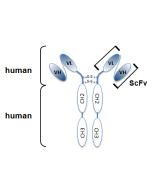 anti-Tubulin-GTP, mAb (rec.) (MB11) AG-27B-0009
 -
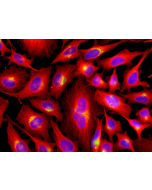 anti-β-Tubulin, mAb (rec.) (S11B) AG-27B-0008
 -
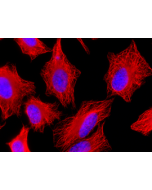 anti-α-Tubulin, mAb (rec.) (F2C) AG-27B-0005
 -
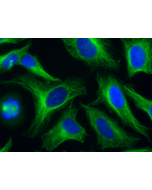 anti-α-Tubulin, mAb (rec.) (F2C) (ATTO 488) AG-27B-0005TD
 -
 anti-β-Tubulin (β-monoE), pAb (IN115) AG-25B-0039
 -
 anti-Delta2-Tubulin, pAb (IN120) AG-25B-0044